

Guides
Mental Health Posters for Schools and Workplaces: Where to Put Them

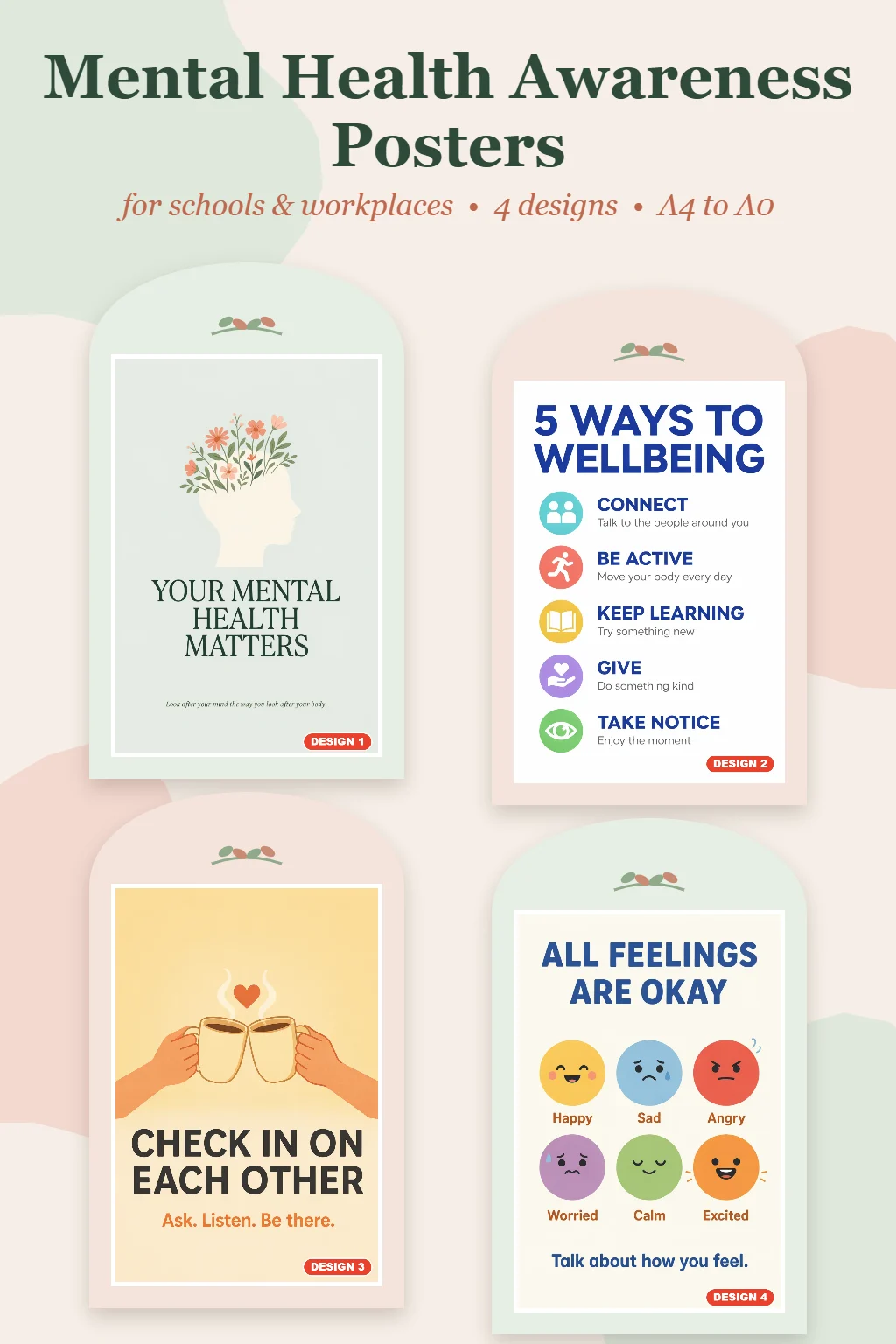
Quick answer: Put mental health and wellbeing posters where people pause and where it feels private enough to read: toilets, corridors, form rooms, the dining hall, staff rooms, kitchens and break rooms. Use a large size in busy spaces and a small one where people stand close, keep each poster to one clear, kind message, and add who to talk to. Refresh the designs each term so people keep noticing them.
A wellbeing poster will not fix anyone’s problems, but it can remind people that it is normal to struggle and that help is close by. This guide covers where to put mental health posters in schools, colleges and workplaces, the right size for each spot, what a good poster should say, and the key dates to plan your displays around in 2027.
Why wellbeing posters are worth having
Posters work quietly. Someone who would never ask for help in front of others might read a poster on the back of a toilet door, or notice a “Check in on each other” reminder by the staff room kettle. A good poster does three things:
- Normalises the conversation. Messages such as “It’s OK not to be OK” tell people that struggling is common, not a weakness.
- Points to real support. The most useful line on any wellbeing poster is who to talk to: a named member of staff, the pastoral team, a mental health first aider or HR.
- Gives small, practical ideas. Simple prompts such as box breathing or taking a break can help in a stressful moment.
Posters work best as part of a wider approach to wellbeing, alongside your school’s pastoral care or your organisation’s support for staff, not instead of it.
Where to put mental health posters
| Location | Why it works | Best size |
|---|---|---|
| Entrance or reception | Shows pupils, staff and visitors that wellbeing matters here | A1 or A0 |
| Corridors and stairwells | Seen by everyone, many times a day | A2 or A1 |
| Toilets | Private, so people can read and take in contact details without being seen | A4 or A3 |
| Form rooms and classrooms | Supports PSHE lessons, tutor time and class discussions | A3 or A2 |
| Dining hall or canteen | People sit, wait and look around | A1 or A0 |
| Library and study areas | Good spot for stress and exam-season messages | A3 |
| Near the pastoral, wellbeing or HR office | Links the message directly to a place to get help | A3 |
| Staff room, kitchen or break room | Reminds staff to look after themselves and each other | A3 or A2 |
| Office noticeboards | Easy to update with local contacts and events | A4 or A3 |
Not sure about sizes? Our poster size guide shows A0 to A4 side by side.
What to include on a wellbeing poster
- One clear message. A short headline that can be read from a few metres away works better than a wall of text.
- Kind, simple wording. “All feelings are okay” or “You are more than a grade” lands better than a list of warning signs.
- Who to talk to. Add the names or photos of key staff, your mental health first aiders or your HR contact next to the poster.
- Where to get help. Many schools and workplaces also list trusted national services, such as Samaritans (116 123), Shout (text SHOUT to 85258), Childline for young people aged 18 and under (0800 1111) and the Education Support helpline for school staff (08000 562 561). If someone’s life is in danger, they should call 999. Always check numbers are current before you print.
- A readable size and finish. Choose a size that suits the viewing distance, and matte paper in bright corridors or behind glass so there is no glare.
Choosing designs for different audiences
- Primary schools: bright, gentle messages such as “All Feelings Are Okay” on our mental health awareness poster, or “Fill Your Cup” on the self-care poster.
- Secondary schools and colleges: direct, reassuring messages such as “It’s OK to ask for help” on the It’s OK Not To Be OK poster, and “You Are More Than A Grade” on the stress awareness poster for exam season.
- Staff rooms and offices: “Check In On Each Other”, “Take a Break” and box breathing guides help adults look after themselves and their colleagues.
You can browse every design in our mental health and wellbeing posters collection.
Key dates to plan your displays
- Children’s Mental Health Week: 1 to 7 February 2027, run by Place2Be.
- Stress Awareness Month: April.
- Mental Health Awareness Week: May, run by the Mental Health Foundation.
- Exam season: May and June, when stress and study-break messages matter most.
- World Mental Health Day: 10 October.
Putting new posters up a week or two before each date gives assemblies, tutor time and team meetings something to point to.
A simple display plan
- 1 × A0 or A1 in the entrance, hall or canteen
- 1 × A2 on each main corridor
- 1 × A3 in each form room and in the staff room
- A4 copies on toilet doors and office noticeboards
Each design comes in four versions, so you can use a different one in each area and swap them each term. Every poster is printed on 260gsm matte or satin paper from A4 to A0. Prices start at £9.99 for A4, with free standard UK delivery, and orders placed before 12PM (Monday to Friday) are printed the same day.
Frequently asked questions
Where should mental health posters go in a school?
Put them where pupils pause and where it feels private enough to read: toilets, corridors, form rooms, the dining hall, the library and near the pastoral or wellbeing office. Add a copy to the staff room for adults too.
What size should a wellbeing poster be?
Use A1 or A0 in entrances, halls and canteens, A2 on corridors, A3 in classrooms, staff rooms and offices, and A4 on toilet doors and noticeboards where people stand close.
What should a mental health poster say?
Keep to one kind, simple message, and add who to talk to locally, such as named staff, mental health first aiders or HR. Many organisations also add trusted national helplines, checked before printing.
When is Children’s Mental Health Week 2027?
Children’s Mental Health Week 2027 runs from 1 to 7 February 2027 and is organised by the charity Place2Be.
How often should wellbeing posters be changed?
Refresh them at least once a term, or for key dates such as Children’s Mental Health Week and exam season. Rotating designs stops posters blending into the background.
